
Disease management
Current approaches
Current approaches
Now there is a treatment option available for Alexander disease, marking an important advancement that reflects a growing understanding of the disease and expands management beyond symptomatic care.17 At the same time, a multidisciplinary approach focused on alleviating symptoms and enhancing quality of life remains essential to disease management.1 Because of the rare nature of Alexander disease, there are a limited number of medical experts who specialize in confirming the diagnosis and developing a disease management plan, which means that affected people may need to travel long distances to consult with specialists.65
Additional approaches to disease management include therapies or devices to compensate for some of the physical (eg, seizures, dysphagia, mobility), speech (eg, dysphonia, dysarthria), and cognitive (eg, developmental delay, behavioral problems) difficulties experienced by people living with Alexander disease.1,38

An FDA-approved prescription medicine is available for pediatric and adult patients with Alexander disease.17

NEUROLOGICAL MEDICATIONS
To manage seizures, muscle spasticity, dystonia, pain, and other neurological symptoms1,38

NUTRITIONAL SUPPORT AND DIETARY MODIFICATIONS
To address feeding difficulties due to dysphagia and/or recurrent vomiting21,38
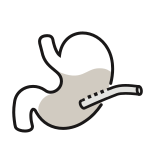
Gastronomy tube
To ensure adequate nutrition, minimize aspiration risk, and administer medications for those with severe dysphagia38
RESPIRATORY Interventions
To address respiratory insufficiency, including infection prevention, airway maintenance, and mechanical support38

GI/URINARY Medications/interventions
To control reflux, vomiting, drooling, constipation, and urinary retention/incontinence1,38

Augmentative and alternative communication strategies
To assist with communication impairments21

Occupational Therapy
To assist those with physical, cognitive, and/or developmental impairments to maintain their ability to perform everyday tasks21

Physical THERAPY
To improve range of motion and strength, preserve motor skills, and maximize mobility21,38

Assistive Devices
To improve mobility, such as orthotics, braces, gait trainers, wheelchairs, walkers, lifts, and standers38

Sleep Hygiene Optimization
To address sleep disorders and appropriate interventions for sleep apnea38

Neuropsychological support
To address learning and cognitive development, and to develop a plan to optimize learning strategies21
Orthopedic exams and interventions
To evaluate and treat scoliosis, hip dysplasia and dislocation, and low bone mass/fractures38
MULTIDISCIPLINARY TEAM
According to the 2015 GLIA consensus guidelines, the use of a collaborative multidisciplinary team of healthcare providers to address the range of clinical symptoms has the potential to improve care in people with leukodystrophies.66 This team may include1,38:
- Primary care physicians
- Palliative care specialists
- Neurologists
- Neurosurgeons
- Feeding specialists
- Gastroenterologists
- Physical and occupational therapists
- Geneticists
- Urologists
- Radiologists
- Pulmonologists
- Orthopedic surgeons
- Speech-language pathologists
- Social workers
The transition from pediatric to adult care may be especially challenging in individuals with rare disorders; the establishment of standard protocols for the management of transition may help to facilitate a seamless integration from child-centered to adult-centered care.67